
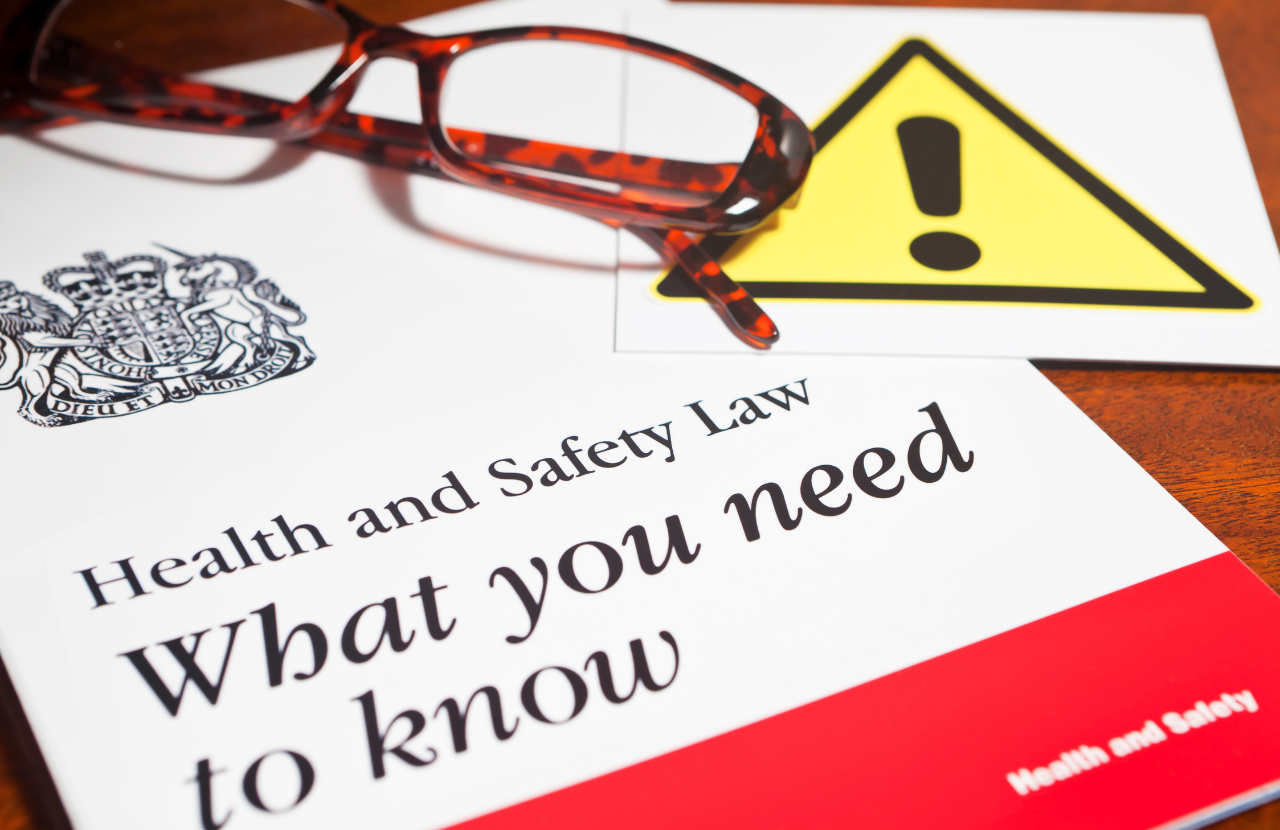

We have compiled a comprehensive list of health and safety legislation UK employers should know. This list covers the most important health and safety laws and regulations affecting workplaces across sectors in the UK.
Core health and safety management legislation
This is a list of health and safety legislation that underpins health and safety management in the UK.
Health and Safety at Work etc. Act 1974
The Health and Safety at Work etc. Act 1974 is the foundation of workplace health and safety law in Great Britain. It places general duties on employers to protect the health, safety, and welfare of employees and others affected by work activities.
Key requirements include:
- providing safe systems of work,
- maintaining safe equipment and workplaces,
- providing information, instruction, training, and supervision, and
- protecting non-employees affected by work activities.
Employees also have duties to take reasonable care of themselves and others and cooperate with employers on health and safety matters. The Act supports physical and psychological safety in the workplace.
Management of Health and Safety at Work Regulations 1999
The Management of Health and Safety at Work Regulations 1999 regulations underpin day-to-day workplace health and safety management. It requires employers to assess workplace risks and implement appropriate control measures.
Key requirements include:
- carrying out suitable and sufficient risk assessments,
- appointing competent persons,
- implementing emergency procedures,
- providing health and safety training, and
- considering vulnerable workers such as young persons, expectant mothers, disabled workers, and inexperienced employees.
The regulations also require employers to review controls where circumstances change, including changes affecting mental wellbeing or workplace stress.
Workplace (Health, Safety and Welfare) Regulations 1992
The Workplace (Health, Safety and Welfare) Regulations 1992 regulations set minimum standards for workplace conditions and facilities to help maintain employee health, safety, and wellbeing.
Key requirements include:
- suitable lighting, ventilation, and temperature,
- clean workplaces and welfare facilities,
- safe traffic routes and flooring, and
- access to toilets, drinking water, and rest facilities.
The regulations apply to most indoor workplaces and support employee wellbeing, comfort, accessibility, and hygiene.
Health and Safety Information for Employees Regulations 1989
The Health and Safety Information for Employees Regulations 1989 require employers to provide employees with information about health and safety law in the workplace.
Key requirements include:
- displaying the approved HSE health and safety law poster or providing equivalent information,
- ensuring employees understand their health and safety rights and responsibilities, and
- keeping information accessible within the workplace.
The regulations help improve employee awareness of workplace health and safety arrangements.
Health and Safety (Consultation with Employees) Regulations 1996
The Health and Safety (Consultation with Employees) Regulations 1996 require employers to consult employees on health and safety matters where no recognised trade union exists.
Key requirements include:
- consulting employees about risks and controls,
- discussing workplace changes affecting safety, and
- involving employees in health and safety arrangements.
Effective consultation can improve engagement, communication, and workplace safety culture.
Safety Representatives and Safety Committees Regulations 1977
The Safety Representatives and Safety Committees Regulations 1977 support trade union involvement in workplace health and safety.
Key requirements include:
- consulting recognised safety representatives,
- allowing workplace inspections, and
- establishing safety committees where requested.
The regulations help improve worker participation, communication, and consultation on safety matters.
Fire safety and emergency arrangements
These laws help organisations protect people from fire and emergency risks, support safe evacuation arrangements, and ensure appropriate emergency response measures are in place.
Regulatory Reform (Fire Safety) Order 2005
The Regulatory Reform (Fire Safety) Order 2005 governs fire safety management in non-domestic premises.
Key requirements include:
- carrying out fire risk assessments,
- implementing fire precautions,
- maintaining escape routes and fire equipment, and
- appointing responsible persons.
The legislation applies to employers, landlords, and building operators and supports the safe evacuation and protection of occupants.
Fire (Scotland) Act 2005
The Fire (Scotland) Act 2005 forms the foundation of fire safety law in Scotland for non-domestic premises. It places duties on employers and persons with control of premises to reduce the risk of fire and protect occupants.
Key requirements include:
- carrying out fire safety risk assessments,
- implementing appropriate fire precautions,
- maintaining safe escape routes and fire safety measures, and
- ensuring effective emergency procedures are in place.
The Act applies to workplaces and many non-domestic premises and supports the prevention of fire-related injuries, fatalities, and property damage.
Fire Safety (Scotland) Regulations 2006
The Fire Safety (Scotland) Regulations 2006 support the Fire (Scotland) Act 2005 by setting more detailed fire safety requirements for certain premises.
Key requirements include:
- providing suitable fire detection and warning systems,
- maintaining fire-fighting equipment,
- ensuring emergency lighting and signage are adequate, and
- protecting people especially at risk in the event of fire.
The regulations help organisations manage day-to-day fire safety arrangements and maintain safe evacuation standards.
First-Aid at Work Regulations 1981
The First-Aid at Work Regulations 1981 require employers to provide appropriate first-aid arrangements.
Key requirements include:
- providing first-aid equipment and facilities,
- appointing trained first aiders where required, and
- assessing workplace first-aid needs.
The level of first-aid provision should reflect workplace hazards, workforce size, and the needs of employees and visitors.
Bottom of Form
Workplace equipment and machinery
These regulations help organisations reduce the risk of injury, equipment failure, and workplace accidents across a range of working environments.
Provision and Use of Work Equipment Regulations 1998 (PUWER)
PUWER requires work equipment to be suitable, maintained, inspected, and used safely.
Key requirements include:
- ensuring equipment is appropriate for the task,
- carrying out inspections and maintenance,
- providing operator training, and
- implementing safeguards and emergency controls.
The regulations apply to machinery, tools, vehicles, and workplace equipment and help protect workers from injuries caused by unsafe equipment.
Lifting Operations and Lifting Equipment Regulations 1998 (LOLER)
LOLER applies to lifting equipment and lifting operations.
Key requirements include:
- planning lifting operations properly,
- ensuring lifting equipment is thoroughly examined,
- using competent operators, and
- preventing risks from falling loads or equipment failure.
LOLER commonly applies to cranes, hoists, forklifts, lifts, and lifting accessories used across construction, logistics, manufacturing, and maintenance work.
Personal Protective Equipment at Work Regulations 1992
The Personal Protective Equipment at Work Regulations 1992 require employers to provide suitable PPE where risks cannot be adequately controlled by other measures.
Key requirements include:
- assessing PPE suitability,
- providing PPE free of charge,
- ensuring PPE is maintained and replaced, and
- training employees in correct use.
Employees must use PPE correctly and report defects. Employers should also ensure PPE is suitable for different users, including women, disabled employees, and workers with religious clothing requirements where applicable.
Safety Signs and Signals Regulations 1996
The Safety Signs and Signals Regulations 1996 govern the use of workplace safety signs, signals, and markings where risks cannot be adequately controlled by other measures.
Key requirements include:
- providing appropriate warning and prohibition signs,
- using consistent colours and symbols,
- marking emergency exits and fire equipment, and
- ensuring employees understand safety signage.
The regulations support hazard communication and emergency awareness across workplaces.
Electricity at Work Regulations 1989
The Electricity at Work Regulations 1989 require electrical systems to be used and maintained safely.
Key requirements include:
- preventing danger from electrical systems,
- maintaining electrical equipment,
- ensuring competent electrical work, and
- implementing safe isolation procedures.
The regulations apply to virtually all workplaces using electricity and help prevent electric shock, burns, fires, and explosions.
Occupational health, hygiene and employee wellbeing
These laws help organisations manage occupational health risks, prevent work-related illness and injury, and support safer and healthier working environments.
Control of Substances Hazardous to Health Regulations 2002 (COSHH)
COSHH requires employers to assess and control risks from hazardous substances.
Key requirements include:
- carrying out COSHH assessments,
- preventing or reducing exposure,
- implementing control measures such as ventilation or PPE, and
- providing health surveillance where appropriate.
COSHH applies to chemicals, dusts, fumes, gases, and biological agents. It is particularly important for preventing occupational illness and long-term health conditions.
Manual Handling Operations Regulations 1992
The Manual Handling Operations Regulations 1992 aim to reduce injuries caused by lifting and moving loads.
Key requirements include:
- avoiding hazardous manual handling where possible,
- assessing manual handling risks,
- reducing lifting risks, and
- providing information and training.
Manual handling injuries remain one of the most common causes of workplace absence and can affect workers of all ages and physical abilities.
Control of Noise at Work Regulations 2005
The Control of Noise at Work Regulations 2005 protect workers from excessive workplace noise exposure.
Key requirements include:
- assessing noise risks,
- implementing noise controls,
- providing hearing protection, and
- arranging health surveillance where required.
Long-term exposure can cause permanent hearing damage and communication difficulties.
Control of Vibration at Work Regulations 2005
The Control of Vibration at Work Regulations 2005 require employers to manage vibration exposure.
Key requirements include:
- assessing vibration risks,
- reducing exposure levels,
- maintaining equipment properly, and
- monitoring employee exposure.
The regulations help prevent conditions such as hand-arm vibration syndrome (HAVS) and back problems linked to vibration exposure.
Working Time Regulations 1998
The Working Time Regulations 1998 govern working hours and rest periods.
Key requirements include:
- limits on average weekly working hours,
- minimum rest breaks and daily rest periods,
- paid annual leave entitlement, and
- protections for night workers.
The regulations aim to reduce fatigue, burnout, stress-related illness, and other health and safety risks linked to excessive working hours.
Health and Safety (Display Screen Equipment) Regulations 1992
The Health and Safety (Display Screen Equipment) Regulations 1992 apply to employees who regularly use display screen equipment.
Key requirements include:
- carrying out workstation assessments,
- reducing risks from poor posture and repetitive work,
- providing eye tests on request, and
- ensuring suitable workstation design.
The regulations help reduce musculoskeletal disorders, visual fatigue, and discomfort associated with prolonged screen use, including for remote and hybrid workers.
Food safety in the workplace
These laws help organisations manage food-related risks and maintain safe practices wherever food is prepared, handled, stored, or provided.
Food Safety Act 1990
The Food Safety Act 1990 forms the foundation of UK food safety law. It places duties on organisations providing food to ensure it is safe to eat and prepared hygienically.
Key requirements include:
- preventing contamination and unsafe food practices,
- maintaining hygienic food preparation areas,
- ensuring food is stored safely, and
- protecting employees, visitors, and consumers from food-related risks.
The Act can apply to workplace canteens, cafés, catering operations, hospitality facilities, schools, healthcare settings, retail, and food manufacturing environments.
High-risk work activities and hazardous environments
These regulations help organisations manage serious workplace hazards, reduce the likelihood of major incidents, and protect workers operating in potentially dangerous conditions.
Work at Height Regulations 2005
The Work at Height Regulations 2005 apply where a person could fall and be injured.
Key requirements include:
- avoiding work at height where possible,
- using suitable access equipment,
- planning and supervising work properly, and
- ensuring workers are competent.
Falls from height remain a leading cause of workplace fatalities, particularly in construction, maintenance, warehousing, and utilities work.
Confined Spaces Regulations 1997
The Confined Spaces Regulations 1997 apply to work in confined spaces with serious specified risks.
Key requirements include:
- avoiding confined space entry where possible,
- implementing safe systems of work,
- providing emergency rescue arrangements, and
- ensuring workers are competent.
Confined spaces can present life-threatening hazards very quickly, including toxic atmospheres, oxygen deficiency, and engulfment.
Construction (Design and Management) Regulations 2015 (CDM)
CDM regulates health and safety management on construction projects.
Key requirements include:
- appointing duty holders,
- planning construction work safely,
- coordinating contractors, and
- managing site risks throughout the project lifecycle.
CDM applies to both commercial and domestic construction work and places responsibilities on clients, designers, and contractors.
Control of Asbestos Regulations 2012
The Control of Asbestos Regulations 2012 help prevent exposure to asbestos fibres.
Key requirements include:
- identifying asbestos-containing materials,
- managing asbestos risks,
- preventing uncontrolled exposure, and
- ensuring appropriate training.
Duty holders in non-domestic premises have specific asbestos management responsibilities. Exposure to asbestos can cause life-threatening diseases many years later.
Control of Lead at Work Regulations 2002
The Control of Lead at Work Regulations 2002 require employers to control exposure to lead and prevent lead-related ill health.
Key requirements include:
- assessing lead exposure risks,
- preventing or reducing exposure,
- providing suitable control measures and PPE, and
- carrying out health surveillance where necessary.
The regulations commonly apply to construction, demolition, manufacturing, engineering, and battery-related work involving lead materials.
Dangerous Substances and Explosive Atmospheres Regulations 2002 (DSEAR)
DSEAR requires employers to control risks from flammable substances and explosive atmospheres.
Key requirements include:
- assessing explosion and fire risks,
- eliminating ignition sources,
- implementing safe storage procedures, and
- controlling explosive atmospheres.
DSEAR commonly applies to fuels, solvents, gases, combustible dusts, and other hazardous substances.
Pressure Systems Safety Regulations 2000
The Pressure Systems Safety Regulations 2000 apply to pressure systems such as boilers and compressed air systems.
Key requirements include:
- written schemes of examination,
- periodic inspections,
- safe operating limits, and
- maintenance of pressure equipment.
The regulations help prevent dangerous pressure system failures that could cause serious injury or explosions.
Gas Safety (Installation and Use) Regulations 1998
The Gas Safety (Installation and Use) Regulations 1998 govern gas safety in workplaces and rented premises.
Key requirements include:
- using Gas Safe registered engineers,
- maintaining gas appliances safely,
- carrying out gas safety checks, and
- preventing gas leaks and carbon monoxide exposure.
The regulations are particularly important for landlords, facilities managers, and organisations responsible for gas systems.
Control of Major Accident Hazards Regulations 2015 (COMAH)
COMAH applies to sites handling large quantities of dangerous substances.
Key requirements include:
- preventing major industrial accidents,
- preparing emergency plans,
- informing local authorities, and
- implementing robust safety management systems.
COMAH commonly applies to chemical plants, fuel storage facilities, and large industrial sites with high-hazard operations.
Ionising Radiations Regulations 2017
The Ionising Radiations Regulations 2017 protect workers and others from exposure to ionising radiation.
Key requirements include:
- restricting radiation exposure,
- appointing radiation protection advisers,
- monitoring exposure levels, and
- implementing controlled areas and procedures.
The regulations apply to sectors including healthcare, research, manufacturing, and industrial radiography.
Bottom of Form
Accident reporting and organisational accountability
These laws support transparency, legal compliance, and continual improvement in workplace health and safety management.
Reporting of Injuries, Diseases and Dangerous Occurrences Regulations 2013 (RIDDOR)
RIDDOR requires certain incidents to be formally reported to the HSE or local authority.
Reportable events include:
- specified workplace injuries,
- occupational diseases,
- dangerous occurrences, and
- work-related fatalities.
RIDDOR reporting helps regulators identify trends, investigate serious incidents, and improve workplace safety standards.
Social Security (Claims and Payments) Regulations 1979
The Social Security (Claims and Payments) Regulations 1979 require employers with 10 or more employees to keep an accident book or equivalent accident recording system.
Key requirements include:
- recording workplace accidents,
- maintaining records securely, and
- keeping information available for claims and investigations.
Accident records can also support internal safety monitoring, trend analysis, and early identification of recurring workplace risks.
Employers’ Liability (Compulsory Insurance) Act 1969
The Employers’ Liability (Compulsory Insurance) Act 1969 requires most employers to hold employers’ liability insurance.
Key requirements include:
- maintaining suitable insurance cover,
- displaying insurance certificates, and
- ensuring cover remains current.
The insurance helps cover compensation claims arising from workplace injury or illness.
Corporate Manslaughter and Corporate Homicide Act 2007
The Corporate Manslaughter and Corporate Homicide Act 2007 applies where serious management failures result in a death.
Key points include:
- organisations can face criminal prosecution,
- courts can impose unlimited fines, and
- failings are assessed at senior management level.
The Act highlights the importance of effective health and safety leadership and management systems.
Bottom of Form
Employee rights, equality and workplace behaviour
These laws help organisations create fair, inclusive, and psychologically safe working environments while protecting employees from unlawful treatment and harmful conduct.
Employment Rights Act 1996
The Employment Rights Act includes protections linked to workplace health and safety.
Key protections include:
- protection for raising health and safety concerns,
- protection from detriment in unsafe situations, and
- rights linked to whistleblowing and dismissal.
Employees have legal protection in certain circumstances where they refuse unsafe work or report safety concerns.
Equality Act 2010
The Equality Act 2010 protects employees and others from discrimination, harassment, and victimisation based on protected characteristics such as disability, sex, race, age, religion, and sexual orientation.
Key requirements include:
- preventing workplace discrimination and harassment,
- making reasonable adjustments for disabled employees,
- ensuring fair workplace policies and practices, and
- protecting employees from victimisation after raising concerns.
The Act is particularly important for supporting mental health conditions, neurodiversity, pregnancy, menopause, disability, and inclusive workplace practices.
Disability Discrimination Act 1995
The Disability Discrimination Act 1995 protects disabled people from discrimination in employment and other areas of public life.
Key requirements include:
- preventing disability discrimination and harassment,
- making reasonable adjustments for disabled employees,
- ensuring workplace policies do not unfairly disadvantage disabled people, and
- supporting accessibility and inclusion.
The Act applies across Northern Ireland and helps support equal access to employment and workplace participation.
Protection from Harassment Act 1997
The Protection from Harassment Act 1997 can apply to serious workplace bullying and harassment cases.
Key requirements include:
- preventing repeated unwanted behaviour,
- protecting employees from intimidation and harassment, and
- addressing conduct that may cause distress or alarm.
Employers may face liability where workplace harassment is not properly addressed, particularly where behaviour affects employee wellbeing or mental health.
Health and safety legislation – Northern Ireland
Health and Safety at Work (Northern Ireland) Order 1978
The Health and Safety at Work (Northern Ireland) Order 1978 is the equivalent primary health and safety legislation for Northern Ireland. The Order closely mirrors the Health and Safety at Work etc. Act 1974 and places similar general duties on employers, employees, and others to protect health, safety, and welfare in the workplace.
Management of Health and Safety at Work Regulations (Northern Ireland) 2000
The Management of Health and Safety at Work Regulations (Northern Ireland) 2000 are the Northern Ireland equivalent of the Management of Health and Safety at Work Regulations 1999.
The regulations establish the framework for day-to-day workplace health and safety management in Northern Ireland and place similar duties on employers to assess risks, implement appropriate control measures, and protect employees and others affected by work activities.
Workplace (Health, Safety and Welfare) Regulations (Northern Ireland) 1993
The Workplace (Health, Safety and Welfare) Regulations (Northern Ireland) 1993 are the Northern Ireland equivalent of the Workplace (Health, Safety and Welfare) Regulations 1992.
The regulations establish minimum standards for workplace environments and welfare facilities, helping employers maintain safe, healthy, and suitable working conditions for employees and others using the workplace.
Health and Safety (Consultation with Employees) Regulations (Northern Ireland) 1996
The Health and Safety (Consultation with Employees) Regulations (Northern Ireland) 1996 are the Northern Ireland equivalent of the Health and Safety (Consultation with Employees) Regulations 1996.
The regulations require employers to consult employees on workplace health and safety matters where no recognised trade union exists and support employee involvement in health and safety decision-making.Top of Form
Fire and Rescue Services (Northern Ireland) Order 2006
The Fire and Rescue Services (Northern Ireland) Order 2006 establishes fire safety duties in Northern Ireland for workplaces and other non-domestic premises.
Key requirements include:
- assessing fire risks,
- implementing preventive and protective fire measures,
- maintaining safe means of escape, and
- appointing responsible persons for fire safety management.
The Order applies to employers, landlords, and persons in control of premises and supports the protection of employees, visitors, and members of the public.
Fire Safety Regulations (Northern Ireland) 2010
The Fire Safety Regulations (Northern Ireland) 2010 provide additional fire safety requirements to support the Fire and Rescue Services (Northern Ireland) Order 2006.
Key requirements include:
- maintaining fire detection and alarm systems,
- ensuring emergency routes and exits remain safe and accessible,
- providing appropriate fire safety information and training, and
- implementing suitable maintenance and testing procedures for fire precautions.
The regulations help organisations maintain effective fire prevention and emergency evacuation arrangements across a range of non-domestic premises.Top of Form
Bottom of Form
Health and Safety (First-Aid) Regulations (Northern Ireland) 1982
The Health and Safety (First-Aid) Regulations (Northern Ireland) 1982 are the Northern Ireland equivalent of the First-Aid at Work Regulations 1981. The regulations require employers to provide suitable first-aid arrangements to support the immediate treatment of injuries and illnesses arising in the workplace.
Provision and Use of Work Equipment Regulations (Northern Ireland) 1999
The Provision and Use of Work Equipment Regulations (Northern Ireland) 1999 are the Northern Ireland equivalent of PUWER. The regulations require employers to ensure that work equipment provided for use at work is suitable, properly maintained, safely operated, and used by competent employees.
Lifting Operations and Lifting Equipment Regulations (Northern Ireland) 1999
The Lifting Operations and Lifting Equipment Regulations (Northern Ireland) 1999 are the Northern Ireland equivalent of LOLER. The regulations establish requirements for the safe planning, supervision, examination, and operation of lifting equipment and lifting activities in the workplace.
Personal Protective Equipment at Work Regulations (Northern Ireland) 1993
The Personal Protective Equipment at Work Regulations (Northern Ireland) 1993 are the Northern Ireland equivalent of the Personal Protective Equipment at Work Regulations 1992. The regulations require employers to provide suitable personal protective equipment where workplace risks cannot be adequately controlled by other health and safety measures.
Health and Safety (Signs and Signals) Regulations (Northern Ireland) 1996
The Health and Safety (Signs and Signals) Regulations (Northern Ireland) 1996 are the Northern Ireland equivalent of the Safety Signs and Signals Regulations 1996. The regulations establish requirements for the use of workplace safety signs, signals, and markings where risks cannot be adequately controlled by other health and safety measures.
Electricity at Work Regulations (Northern Ireland) 1991
The Electricity at Work Regulations (Northern Ireland) 1991 are the Northern Ireland equivalent of the Electricity at Work Regulations 1989. The regulations require electrical systems and electrical work activities to be managed safely to prevent danger arising from the use of electricity in the workplace.
Control of Substances Hazardous to Health Regulations (Northern Ireland) 2003
The Control of Substances Hazardous to Health Regulations (Northern Ireland) 2003 are the Northern Ireland equivalent of the Control of Substances Hazardous to Health Regulations 2002 (COSHH). The regulations require employers to assess and control risks arising from hazardous substances used, produced, or encountered in the workplace.
Manual Handling Operations Regulations (Northern Ireland) 1992
The Manual Handling Operations Regulations (Northern Ireland) 1992 are the Northern Ireland equivalent of the Manual Handling Operations Regulations 1992. The regulations require employers to manage and reduce the risks associated with lifting, carrying, pushing, pulling, and moving loads in the workplace.
Control of Noise at Work Regulations (Northern Ireland) 2006
The Control of Noise at Work Regulations (Northern Ireland) 2006 are the Northern Ireland equivalent of the Control of Noise at Work Regulations 2005. The regulations require employers to assess and manage workplace noise risks to protect employees from hearing damage and other health effects associated with excessive noise exposure.
Control of Vibration at Work Regulations (Northern Ireland) 2005
The Control of Vibration at Work Regulations (Northern Ireland) 2005 are the Northern Ireland equivalent of the Control of Vibration at Work Regulations 2005. The regulations require employers to assess and control employee exposure to workplace vibration that could cause injury or long-term health conditions.
Working Time Regulations (Northern Ireland) 2016
The Working Time Regulations (Northern Ireland) 2016 are the Northern Ireland equivalent of the Working Time Regulations 1998. The regulations establish legal requirements relating to working hours, rest periods, annual leave, and protections for night workers to support employee health, safety, and wellbeing.
Health and Safety (Display Screen Equipment) Regulations (Northern Ireland) 1992
The Health and Safety (Display Screen Equipment) Regulations (Northern Ireland) 1992 are the Northern Ireland equivalent of the Health and Safety (Display Screen Equipment) Regulations 1992. The regulations require employers to assess and manage risks associated with the regular use of display screen equipment in the workplace.
Food Safety (Northern Ireland) Order 1991
The Food Safety (Northern Ireland) Order 1991 is the Northern Ireland equivalent of the Food Safety Act 1990. The Order establishes the legal framework for food safety and hygiene in Northern Ireland and places duties on organisations involved in the preparation, handling, storage, and provision of food.
Work at Height Regulations (Northern Ireland) 2005
The Work at Height Regulations (Northern Ireland) 2005 are the Northern Ireland equivalent of the Work at Height Regulations 2005. The regulations require employers and those in control of work at height activities to properly plan, supervise, and carry out work safely to prevent falls and related injuries.
Confined Spaces Regulations (Northern Ireland) 1999
The Confined Spaces Regulations (Northern Ireland) 1999 are the Northern Ireland equivalent of the Confined Spaces Regulations 1997. The regulations require employers to manage and control the serious risks associated with work carried out in confined spaces where hazardous conditions may arise.
Construction (Design and Management) Regulations (Northern Ireland) 2016
The Construction (Design and Management) Regulations (Northern Ireland) 2016 are the Northern Ireland equivalent of the Construction (Design and Management) Regulations 2015 (CDM). The regulations establish requirements for the planning, coordination, and management of health and safety throughout construction projects.
Control of Asbestos Regulations (Northern Ireland) 2012
The Control of Asbestos Regulations (Northern Ireland) 2012 are the Northern Ireland equivalent of the Control of Asbestos Regulations 2012. The regulations require employers and duty holders to identify, manage, and control the risks associated with asbestos-containing materials in the workplace and non-domestic premises.
Control of Lead at Work Regulations (Northern Ireland) 2003
The Control of Lead at Work Regulations (Northern Ireland) 2003 are the Northern Ireland equivalent of the Control of Lead at Work Regulations 2002. The regulations require employers to assess and control workplace exposure to lead to prevent lead-related ill health and occupational disease.
Dangerous Substances and Explosive Atmospheres Regulations (Northern Ireland) 2003
The Dangerous Substances and Explosive Atmospheres Regulations (Northern Ireland) 2003 are the Northern Ireland equivalent of the Dangerous Substances and Explosive Atmospheres Regulations 2002 (DSEAR). The regulations require employers to assess and control the risks associated with flammable substances, explosive atmospheres, and ignition sources in the workplace.
Pressure Systems Safety Regulations (Northern Ireland) 2004
The Pressure Systems Safety Regulations (Northern Ireland) 2004 are the Northern Ireland equivalent of the Pressure Systems Safety Regulations 2000. The regulations establish requirements for the safe operation, maintenance, inspection, and examination of pressure systems used in the workplace.
Gas Safety (Installation and Use) Regulations (Northern Ireland) 2004
The Gas Safety (Installation and Use) Regulations (Northern Ireland) 2004 are the Northern Ireland equivalent of the Gas Safety (Installation and Use) Regulations 1998. The regulations establish requirements for the safe installation, maintenance, inspection, and use of gas appliances, fittings, and gas systems in workplaces and other relevant premises.
Control of Major Accident Hazards Regulations (Northern Ireland) 2015
The Control of Major Accident Hazards Regulations (Northern Ireland) 2015 are the Northern Ireland equivalent of the Control of Major Accident Hazards Regulations 2015 (COMAH). The regulations require organisations handling significant quantities of dangerous substances to take measures to prevent major industrial accidents and limit the consequences should an incident occur.
Ionising Radiations Regulations (Northern Ireland) 2017
The Ionising Radiations Regulations (Northern Ireland) 2017 are the Northern Ireland equivalent of the Ionising Radiations Regulations 2017. The regulations establish requirements for protecting employees and others from the risks associated with exposure to ionising radiation in the workplace.
Reporting of Injuries, Diseases and Dangerous Occurrences Regulations (Northern Ireland) 1997
The Reporting of Injuries, Diseases and Dangerous Occurrences Regulations (Northern Ireland) 1997 are the Northern Ireland equivalent of the Reporting of Injuries, Diseases and Dangerous Occurrences Regulations 2013 (RIDDOR).
The regulations establish legal requirements for reporting certain workplace incidents, injuries, occupational diseases, and dangerous occurrences to the Health and Safety Executive for Northern Ireland (HSENI) or other relevant enforcing authorities.
Social Security (Claims and Payments) Regulations (Northern Ireland) 1997
The Social Security (Claims and Payments) Regulations (Northern Ireland) 1997 are the Northern Ireland equivalent of the Social Security (Claims and Payments) Regulations 1979. The regulations require employers to maintain workplace accident records and support the recording and management of information relating to workplace injuries and incidents.
Sex Discrimination (Northern Ireland) Order 1976
The Sex Discrimination (Northern Ireland) Order 1976 protects individuals from discrimination, harassment, and victimisation related to sex, marriage, civil partnership, gender reassignment, pregnancy, and maternity in employment and other settings.
Key requirements include:
- preventing discrimination and harassment related to sex and gender,
- ensuring fair recruitment, promotion, and employment practices,
- protecting employees from victimisation after raising concerns, and
- supporting equal opportunities in the workplace.
The Order helps promote fair treatment and inclusive workplace practices across Northern Ireland.
Race Relations (Northern Ireland) Order 1997
The Race Relations (Northern Ireland) Order 1997 protects individuals from racial discrimination, harassment, and victimisation.
Key requirements include:
- preventing discrimination based on race, colour, nationality, ethnic origin, or national origin,
- promoting equal opportunities,
- addressing workplace harassment and victimisation, and
- ensuring fair employment practices.
The Order supports workplace inclusion, dignity, and equal treatment across diverse working environments.
Fair Employment and Treatment (Northern Ireland) Order 1998
The Fair Employment and Treatment (Northern Ireland) Order 1998 protects individuals from discrimination based on religious belief or political opinion.
Key requirements include:
- promoting fair participation in employment,
- preventing religious and political discrimination,
- monitoring workforce composition in certain organisations, and
- ensuring equal treatment during recruitment and employment.
The legislation reflects the specific equality framework within Northern Ireland and supports fair and inclusive employment practices.
Employment Equality (Sexual Orientation) Regulations (Northern Ireland) 2003
The Employment Equality (Sexual Orientation) Regulations (Northern Ireland) 2003 protect employees and job applicants from discrimination and harassment based on sexual orientation.
Key requirements include:
- preventing discrimination during recruitment and employment,
- protecting employees from harassment and victimisation,
- ensuring fair workplace policies and practices, and
- promoting inclusive working environments.
The regulations support equal treatment and dignity at work for employees of all sexual orientations.
Employment Equality (Religion or Belief) Regulations (Northern Ireland) 2003
The Employment Equality (Religion or Belief) Regulations (Northern Ireland) 2003 protect individuals from discrimination and harassment related to religion or philosophical belief.
Key requirements include:
- preventing discrimination during employment and recruitment,
- protecting employees from harassment and victimisation,
- ensuring fair workplace policies and practices, and
- supporting respectful and inclusive working environments.
The regulations help organisations promote equality, dignity, and mutual respect in the workplace.
Employment Equality (Age) Regulations (Northern Ireland) 2006
The Employment Equality (Age) Regulations (Northern Ireland) 2006 protect employees and applicants from age discrimination in employment.
Key requirements include:
- preventing unfair treatment based on age,
- ensuring fair recruitment, promotion, and training opportunities,
- protecting employees from harassment and victimisation, and
- supporting age-inclusive workplace practices.
The regulations apply to workers of all ages and help promote fairness throughout employment.

Adam Clarke
Managing Director (Consulting)