
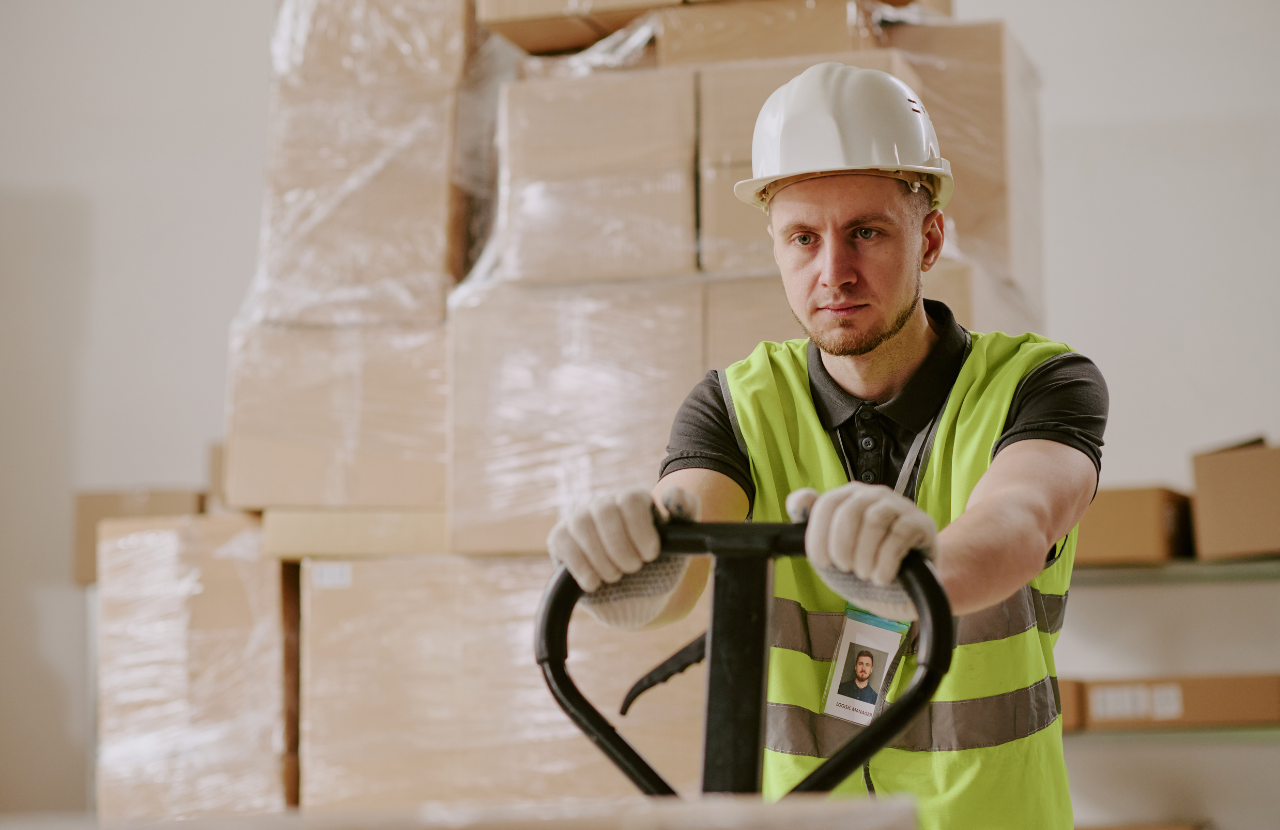

It is essential that everyone in a workplace knows how to use correct manual handling lifting techniques. Whether lifting in a warehouse, construction site, or office, using the right technique helps prevent strain, protect the spine, and reduce the risk of long-term injury.
According to the Health and Safety Executive (HSE), manual handling accounted for 17% of all non-fatal workplace injuries in 2024/25, making it the second largest cause of workplace injuries in the UK.
In this guide, we explain manual handling safe lifting techniques, what to avoid, and how to apply best practice in everyday work.
Why do safe manual handling lifting techniques matter?
Poor manual handling is one of the most common causes of workplace injury, leading to:
- Back pain and musculoskeletal disorders
- Sprains and strains
- Repetitive strain injuries (RSIs)
- Slipped or herniated discs
- Hernias
Injuries from manual handling lifts often result in reduced productivity, increased absence, and longer-term health issues if not properly managed.
For detailed information, please read our article, The dangers and consequences of poor manual handling.
What are the key principles of moving and handling?
Manual lifting safety is based on a few simple principles that help reduce risk and improve safety in everyday tasks.
Avoid manual handling where possible
Before focusing on lifting techniques, the first step is to consider whether the task needs to involve manual handling at all.
This can be achieved by:
- Using mechanical aids such as trolleys, pallet trucks, hoists, or conveyor systems
- Redesigning tasks or workflows to eliminate unnecessary lifting
- Storing items at accessible heights to reduce bending or reaching
- Breaking loads into smaller, more manageable units
For example, instead of carrying multiple heavy boxes across a warehouse, using a pallet truck or trolley can significantly reduce physical strain and improve efficiency.
Plan the task before starting
Before lifting, take time to assess the task properly. Consider the weight, size, and stability of the load, how far it needs to be moved, and where it will be placed. Check the route for hazards such as obstacles, uneven flooring, wet surfaces, or tight spaces.
Using the TILE approach (Task, Individual, Load, Environment) helps you identify risks before you begin. To learn more, please read our article, TILE manual handling – what are TILE and LITE?
Team lifting
When a load is too heavy, bulky, or awkward for one person to handle safely, a team lift should be used. This helps distribute the weight and reduces the risk of injury.
For example, moving large or unstable items such as furniture, equipment, or long materials is much safer with two or more people working together rather than attempting to lift alone.
Effective communication and coordination are key to safe team lifting, ensuring the load remains stable and always controlled.
For more information, please read our article, Manual handling safety: 10 team lifting tips.
Use correct posture and technique
Maintaining good posture is essential for preventing injury. This means bending your knees, keeping your back straight, and lifting using your legs rather than your back. Avoid stooping or reaching excessively and keep your head up to maintain good alignment.
For instance, when lifting a box from the floor, lowering into a controlled squat and keeping the load close to your body helps reduce strain on the spine.
For step-by-step instructions, see ‘What is the correct technique for lifting?’ below.
Avoid unnecessary strain or repetition
Repetitive lifting or sustained physical effort can lead to fatigue, increasing the risk of injury over time. Tasks should be planned to minimise repetition where possible, and regular breaks should be taken to allow recovery.
For example, in a warehouse or production environment, rotating staff between different tasks can help reduce the risk of overuse injuries.
When should you use equipment instead of lifting?
If lifting cannot be avoided, you should consider using equipment such as trolleys or pallet trucks when:
- The load is heavy or awkward – for example, items that are difficult to grip, unbalanced, or too large to keep close to the body
- The task is repetitive – frequent lifting over a shift can lead to fatigue and increase the risk of strain or long-term injury
- The distance is long – carrying loads over longer distances increases physical demand and the likelihood of loss of control
- There is a risk of injury – particularly where lifting involves bending, twisting, reaching, or working in confined spaces
What is the correct technique for lifting?
When lifting a load you need to follow a clear and controlled approach. While methods of manual handling vary according to the situation, these steps are the foundation of good practice.
1. Assess the load and plan the lift
Before lifting, take a moment to assess the task. Consider:
- How heavy or awkward the load is
- Whether you can move it safely on your own
- If there is a safer alternative, such as using equipment.
2. Position your feet for stability
Stand with your feet hip-width apart and place one foot slightly forward. This gives you a stable base and helps maintain balance throughout the lift.
3. Bend your knees and keep your back straight
Lower yourself by bending your knees and hips, keeping your back as straight as possible. Avoid bending at the waist, as this increases strain on your spine.
4. Get a secure grip
Make sure you have a firm grip before lifting. Use your palms rather than just your fingers and adjust your position if needed before you start moving.
5. Keep the load close to your body
Holding the load close to your torso reduces pressure on your back and improves control. If you’re unsure where to hold and carry a load, keeping it close to your centre of gravity is always safest.
6. Engage your core muscles
Tighten your core muscles to provide additional support to your lower back and spine while lifting.
7. Lift smoothly and slowly
Lift the load smoothly and slowly by straightening your legs, not your back. Use the power from your legs and hips to lift, keeping your back straight.
8. Avoid twisting
Do not twist your body while lifting or carrying the load. Pivot your feet to change direction instead of twisting your torso.
9. Take short steps
When carrying the load, take small, steady steps. Avoid rushing or walking too quickly, especially on uneven surfaces.
10. Take breaks
If your job involves frequent lifting, take regular breaks to rest and stretch to prevent muscle fatigue and reduce the risk of injury.
9. Lower the load carefully
When setting the load down, bend your knees again and keep your back straight. Place the load down gently and avoid dropping it.
Quick summary: safe vs unsafe manual lifting
| Feature | Safe practice | Unsafe practice |
| Back position | Keep back straight | Bend or round the spine |
| Legs | Bend knees and hips | Keep legs straight |
| Load position | Keep load close | Hold away from body |
| Movement | Turn with feet | Twist torso |
| Grip | Use full hands | Use fingertips |
What should you not do when lifting a load?
Many manual handling injuries can be prevented by avoiding common mistakes, such as:
- Twisting while lifting – places uneven strain on the spine and significantly increases the risk of back injury.
- Lifting with a bent or rounded back – puts excessive pressure on the lower back rather than using the stronger leg muscle.
- Carrying loads that block your view – reduces visibility and increases the risk of trips, collisions, or falls.
- Rushing or working under pressure – leads to poor technique, reduced concentration, and a higher likelihood of errors.
- Attempting loads that are too heavy – increases the risk of acute injury, particularly if lifting without assistance or equipment.
Recognising these risks is vital to safe manual handling and lifting.
What is an example of good manual handling practice?
A warehouse operative needs to move several boxes weighing around 15kg from a pallet to shelving.
Before starting, they assess the task by checking the weight of the boxes, the distance to the shelving, and ensuring the route is clear of obstacles. They decide to use a pallet truck to move the load closer, reducing the carrying distance.
When lifting each box, they position their feet for stability, bend their knees, and keep their back straight. They take a firm grip and keep the load close to their body as they lift using their legs. Rather than twisting, they turn with their feet to face the shelving.
As the task is repetitive, they take regular breaks and rotate with a colleague to reduce fatigue. For heavier or awkward items, they use a team lift to share the load safely.
Manual handling training for safer workplaces
Understanding manual handling lifting techniques is key to creating a safer and more efficient workplace. Structured, practical training ensures employees can apply these techniques confidently and consistently in real-world situations.
Our expert-led Manual Handling Course provides your team with the skills and knowledge needed to carry out manual handling tasks safely, recognise risks, and follow best practice. Designed by experienced health and safety consultants, our training supports compliance with the Manual Handling Operations Regulations 1992.
To find out more about our Manual Handling Course and bespoke training options, contact our friendly team today: 0203 011 4242 / info@praxis42.com

Adam Clarke
Managing Director (Consulting)