
If you are maintaining a property, planning refurbishment work or responsible for a building, knowing how to identify and work safely around asbestos sheets helps protect people from asbestos exposure and supports compliance with legislation.
This guide explains when asbestos sheets can be left in place, when encapsulation or removal should be considered, how to dispose of asbestos sheets safely, and who is competent to work with asbestos.
What is an asbestos sheet?
An asbestos sheet (or ‘asbestos cement sheet’) is a building material made from cement reinforced with asbestos fibres. It was widely used throughout much of the twentieth century for roofing, wall cladding, soffits and other external building applications because it was durable, weather resistant and relatively inexpensive. The use of asbestos was banned in the UK in 1999.
Common uses include:
- Corrugated roof sheets
- Flat roof sheets and roofing panels
- Wall cladding
- Garage and shed roofs
- Agricultural and farm building roofs
- Factory and warehouse roofs
- Soffits and fascias
What is the typical asbestos content of asbestos cement sheets?
Asbestos cement sheets contain around 10–15% asbestos fibres by weight. The exact asbestos content varies depending on the manufacturer and when the product was made.
Most asbestos cement sheets were manufactured using chrysotile (white asbestos), the most commonly type of asbestos in UK construction products. Some older asbestos cement sheets also contain amosite (brown asbestos) or crocidolite (blue asbestos), which were used where greater heat resistance or strength was required.
Are asbestos cement sheets dangerous?
Asbestos cement sheets generally present a low risk while they remain in good condition and are left undisturbed. Unlike asbestos insulation board or pipe lagging, the asbestos fibres are firmly bound within the cement, making them less likely to become airborne during normal use.
The risk increases if the cement is damaged or deteriorates, as asbestos fibres can be released into the air and be inhaled. Activities that can release fibres include:
- Cutting or drilling sheets during maintenance or installation.
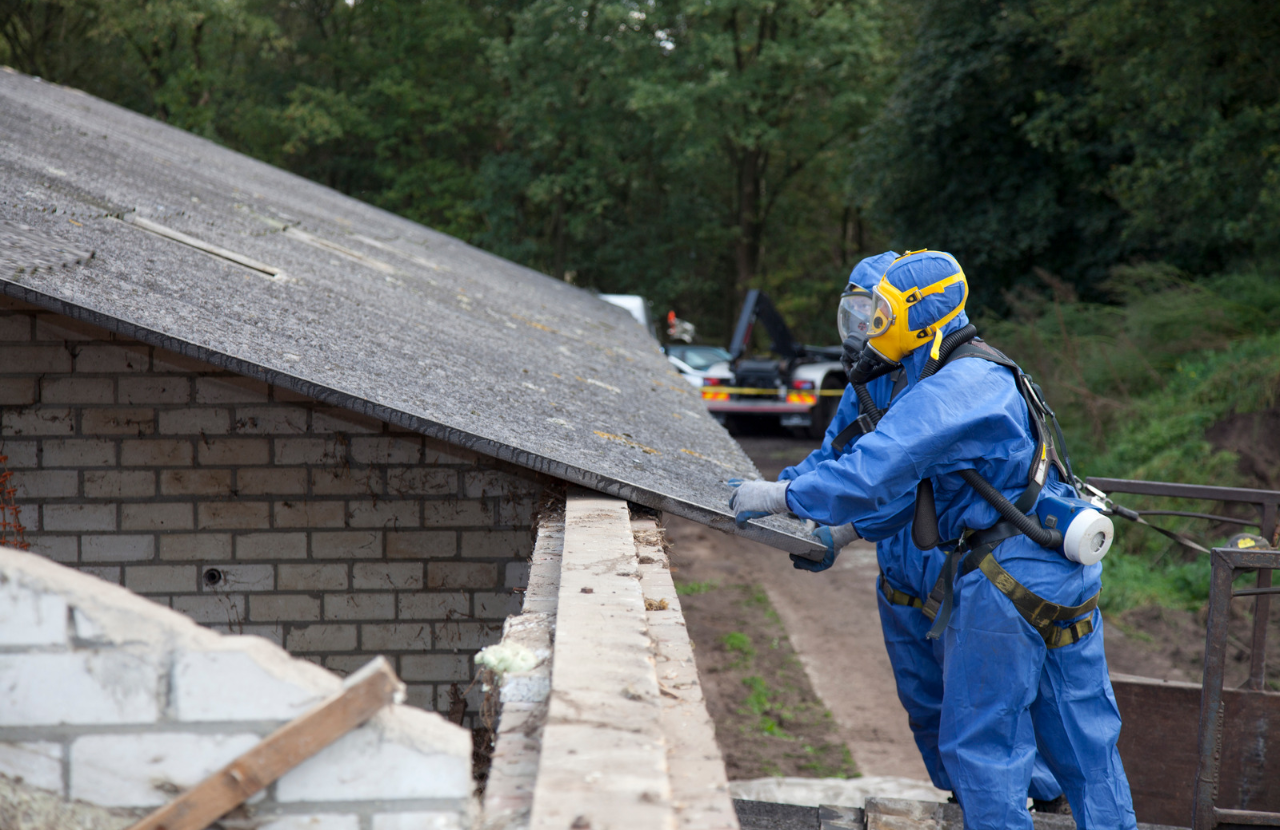
- Breaking or removing sheets without appropriate controls.
- Sanding or grinding the surface.
- Pressure washing asbestos roof sheets, which can erode the cement and release fibres.
- Demolition, refurbishment or other building work that disturbs the material.
- Significant weathering or accidental damage that causes the cement to crack or break.
Breathing in airborne asbestos fibres can cause serious diseases, including mesothelioma, asbestos-related lung cancer and asbestosis. These diseases develop many years after exposure and there is no known safe level of asbestos exposure.
If asbestos cement sheets are in good condition, they can often be left in place and managed safely. However, if they become damaged or work is planned that could disturb them, the risks should be assessed by a competent person.
Who is ‘competent’ to work with asbestos?
A competent person is someone who has the knowledge, training and experience to identify asbestos hazards, assess the risks and recommend appropriate control measures.
The level of competence required depends on the type of work being carried out, from routine management of known asbestos-containing materials to asbestos surveying, repair or removal.
Routine management
The person responsible for managing the premises may be competent to carry out routine inspections of known asbestos cement sheets if they have appropriate asbestos training, understand where asbestos is located within the building, can recognise signs of deterioration and know when specialist advice is required.
Asbestos surveys
If you need to determine whether a material contains asbestos or locate asbestos before refurbishment or demolition work, this should be carried out by a competent asbestos surveyor. Surveyors should work to recognised industry standards and use a UKAS-accredited laboratory to analyse samples.
Repair or removal work
If asbestos cement sheets need to be repaired or removed, a qualified asbestos professional should assess the work before it begins. They can determine the risks, identify the appropriate control measures and advise whether the work can be carried out by trained personnel or should be undertaken by a specialist asbestos contractor.
How do I know if my sheets are asbestos?
Visual inspection cannot confirm the presence of asbestos, but the following may indicate that cement sheeting contains asbestos:
- The building was constructed or reroofed before 2000.
- The roof or cladding appears to be original and has never been replaced.
- The sheets are grey, flat or corrugated cement products commonly used during the twentieth century.
- An existing asbestos survey or asbestos register identifies the material as asbestos cement.
Many modern fibre cement sheets look almost identical to asbestos cement products, so these signs should only be used as indicators. If you are unsure, assume the material contains asbestos until it has been properly identified.
Can asbestos cement sheets be left in place?
If asbestos cement sheets are in good condition and are unlikely to be disturbed, removal is not normally necessary. In many cases, leaving the material in place and managing it appropriately is the safest option because it avoids unnecessarily disturbing the asbestos fibres.
Managing asbestos cement sheets means ensuring their condition is monitored and they are not accidentally damaged during maintenance or building work. For non-domestic premises, this forms part of an organisation’s duty to manage asbestos under the Control of Asbestos Regulations 2012.
Good management includes:
- Checking the condition of the sheets periodically to identify signs of damage or significant deterioration. For non-domestic premises, this should be carried out by someone with the knowledge, training and experience to recognise asbestos hazards.
- Preventing unnecessary disturbance, including drilling, cutting, sanding or pressure washing the sheets.
- Making contractors and maintenance workers aware that asbestos is present before any work begins.
- Keeping asbestos management information up to date, including the asbestos register and asbestos management plan where these are required.
Well-maintained asbestos cement sheets can remain in service for many decades. However, as they age, the cement surface may gradually weather, increasing the likelihood that fibres could be released if the sheets are damaged or disturbed.
If asbestos cement sheets become cracked, heavily damaged or are likely to be affected by refurbishment, demolition or other building work, their condition should be assessed before work begins to determine whether they can remain in place or whether repair or removal is the safer option.
Can asbestos cement sheets be sealed or encapsulated?
If asbestos cement sheets are in good condition but beginning to weather, encapsulation may be a suitable alternative to removal.
Rather than removing the asbestos, encapsulation seals the surface of the sheets using a specialist coating or covering. This helps protect the cement from further deterioration and reduces the likelihood of asbestos fibres being released if the surface is damaged or continues to weather.
Encapsulation is not suitable for every situation. It is generally considered where:
- The sheets are structurally sound and have not been significantly cracked or broken.
- The asbestos cement is unlikely to be disturbed during normal use.
- The material can be safely left in place and monitored.
- Removing the sheets would create a greater risk of fibre release than managing them in situ.
Before encapsulation, the condition of the sheets should be assessed to confirm it is an appropriate option. If recommended, the work should be carried out by a contractor experienced in working with asbestos-containing materials.
Asbestos remains in place after encapsulation, so the sheets should continue to be monitored and repaired or removed if their condition deteriorates.
Can you cut, drill or walk on asbestos roof sheets?
Asbestos roof sheets should not be cut, drilled, sanded or pressure washed because these activities can release hazardous asbestos fibres into the air.
Similarly, walking on asbestos roof sheets should be avoided. As the cement weathers over time, the sheets can become brittle and crack under a person’s weight, creating both a fall hazard and the potential to release asbestos fibres.
Avoid using:
- Pressure washers
- Circular saws
- Angle grinders
- Power sanders
- Wire brushes
If you accidentally damage an asbestos cement sheet, stop work immediately and keep people away from the area. Avoid creating further dust or debris and seek advice before continuing work.
What should you do if an asbestos cement sheet is accidentally damaged?
If an asbestos cement sheet is accidentally damaged:
- Stop work immediately and avoid breaking the material any further.
- Keep people away from the affected area until it has been assessed.
- Do not sweep, brush or use compressed air to clean up dust or debris, as this can spread asbestos fibres.
- Avoid using a domestic vacuum cleaner, as it is not designed to safely collect asbestos fibres.
- Seek advice from a qualified asbestos professional before restarting work or attempting any repairs or clean-up.
If the damage occurs in a non-domestic building, the incident should be recorded and no further work should take place until the damage has been assessed, the asbestos register reviewed where necessary, and suitable control measures implemented.
How to dispose of asbestos sheets
Asbestos cement sheets are classified as hazardous waste and must be disposed of safely. They should never be placed in household bins, general waste skips or mixed with other construction waste.
If asbestos cement sheets need to be disposed of, they should:
- Be kept intact wherever possible, as breaking, cutting or drilling the sheets can release asbestos fibres.
- Be carefully wrapped and sealed in suitable heavy-duty polythene to prevent fibres being released during handling and transport.
- Be clearly identified as asbestos waste before disposal.
For businesses, asbestos waste must be handled in accordance with the Environmental Protection Act 1990, the Hazardous Waste (England and Wales) Regulations 2005 (where applicable) and the Carriage of Dangerous Goods and Use of Transportable Pressure Equipment Regulations 2009.
Many organisations use a registered waste carrier to transport asbestos waste to a facility authorised to accept it.
Improve asbestos awareness across your organisation
If your employees may encounter asbestos sheets or other asbestos-containing materials during their work, our UKATA Asbestos Awareness course helps them recognise where asbestos may be present, understand their responsibilities under the Control of Asbestos Regulations 2012, and reduce the risk of accidental asbestos exposure.
Developed using UKATA-approved content, the course supports organisations in delivering consistent, high-quality asbestos awareness training. Learn more about our UKATA Asbestos Awareness course on our website, or call our friendly team today on 0203 011 4242 / info@praxis42.com

Adam Clarke
Managing Director (Consulting)