
Understanding how fire insurance works in practice and how insurers make decisions can help your business reduce premiums and secure more competitive policies.
This article is based on a Praxis42 webinar which featured Adam Clarke, Managing Director (Consulting) at Praxis42, and Simon Ratcliff, Commercial Property & Liability Underwriting Manager at Hiscox. Together, they shared insights on fire safety, underwriting, and risk management to explain how businesses can strengthen their position with insurers.
What are the first questions insurers ask?
When assessing fire risk, underwriters usually ask two questions to determiner how a policy will be priced, structured, and managed.
Who is the insured?
Insurers look for a clearly identified ‘responsible person’ within the organisation.
Under the Regulatory Reform (Fire Safety) Order 2005 the responsible person is the individual (or individuals) with accountability for fire safety. This responsible person is usually the employer, building owner, or person in control of the premises. Their role is to ensure that appropriate fire precautions are in place to prevent fire, safeguard people, and minimise the risk of property loss.
The responsible person must ensure a written fire risk assessment is maintained and kept up to date. Under the Regulatory Reform (Fire Safety) Order 2005, responsible persons are required to record the significant findings of the fire risk assessment and keep this documentation available to demonstrate how fire risks are being identified and managed. The assessment should be reviewed regularly and updated whenever there are changes to the premises, activities, or fire safety measures.
Equally important is how outcomes are communicated. Employees should be briefed on fire procedures, receive appropriate training, and participate in regular evacuation drills. These activities show that fire safety responsibilities are being fulfilled at a managerial level and across the organisation.
What’s the risk?
The second consideration is the scale and nature of the risk being insured. Trade activity, building use, and the total sums insured all shape how much scrutiny underwriters will apply.
For example, a small clerical office will generally only need to demonstrate compliance with basic fire safety requirements.
By contrast, a £20 million hospitality venue or a site with heat-producing processes such as welding or industrial cooking will face far greater scrutiny, because the potential for ignition and loss is much higher.
As exposure increases, underwriters expect to see additional safeguards, robust controls, and evidence that risks are being managed at both the prevention and response stages.
What essential fire safety standards must be met?
Insurers expect all businesses to demonstrate a baseline level of fire safety. These measures provide confidence that risks are being controlled effectively and that, should an incident occur, the organisation can respond quickly and limit damage.
Fire detection and warning systems
A reliable detection and alarm system is fundamental. Underwriters look for systems that are professionally installed, maintained by competent contractors, and designed to suit the size and complexity of the premises.
In higher-risk environments or those unoccupied for long periods, insurers place value on automatic detection (smoke, heat, or flame sensors) to ensure that a developing fire can be identified without relying on staff presence.
Documented servicing, test records, and evidence of prompt repairs all strengthen confidence that the system will operate when required.
Escape routes and fire doors
Safe evacuation is a legal requirement and a key concern for insurers. Escape routes must remain clear of obstructions, be well lit and clearly signed, and lead to a place of safety.
Doors should open easily in the direction of travel and never be locked in a way that could hinder escape.
Fire doors serve a dual purpose: protecting life by creating safe routes out of the building and containing smoke and flames to limit damage. Insurers expect to see fire doors fitted with self-closing devices, tested regularly, and maintained to ensure they close fully onto their seals. Poorly fitted or wedged-open doors are a common failing noted during surveys.
Electrical safety
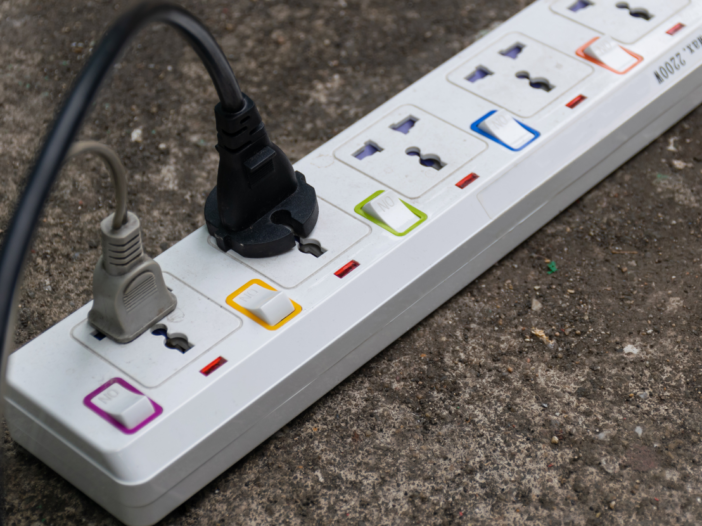
Electrical faults remain a leading cause of commercial fires, so insurers pay close attention to electrical risk management.
Fixed electrical installations should undergo periodic inspection and testing by a competent person, normally every five years in commercial premises, although higher-risk environments may require more frequent inspection.
Portable appliance testing should follow a sensible, risk-based regime rather than a rigid schedule, with employees encouraged to report defects promptly.
See our guide, 8 common electrical hazards in the workplace.
Housekeeping and waste management
Good housekeeping is another critical expectation for compliance and insurance. A particular focus is the management of combustible waste (materials that can ignite easily and fuel a fire). This includes items such as paper, cardboard, packaging, plastics, wood, and general rubbish.
If waste accumulates or is stored against the outside walls of a building, it significantly increases the risk of fire spread. Even a small ignition source, such as a discarded cigarette or faulty charger, can quickly develop into a larger incident when combustible waste is present.
Arson also represents a serious concern for insurers and is one of the leading causes of commercial fires. For this reason, underwriters expect to see combustible waste stored securely, in designated containers or compounds, and kept away from the building envelope.
Speed of response
A core principle of fire risk management is rapid detection and intervention. Delays in raising the alarm or summoning help can allow even a small fire to escalate into a major loss.
In lower-risk premises, a maintained manual or automatic alarm system may be sufficient. For higher-value or higher-risk sites, however, insurers expect stronger measures. These normally include automatic signalling to an alarm receiving centre (ARC), ensuring that once an alarm activates, the fire and rescue service or a keyholder is notified immediately.
Such systems provide assurance that fires will be acted on quickly, even outside working hours, greatly reducing the chance of extensive damage. For insurers, this level of response can be decisive in whether a risk is seen as acceptable.
From minimum to “preferred” standards
Meeting baseline standards is essential, but for larger or more complex risks, insurers look for evidence that organisations are going further. The difference between minimum compliance and preferred controls can be decisive in whether cover is offered, the terms applied, and the premium charged.
Automatic detection
While manual systems may suffice for modest, low-risk premises, higher-value sites benefit from smoke, heat, or flame detectors that provide twenty-four-hour coverage. Automatic detection ensures that a developing fire is identified quickly, even when buildings are unoccupied.
Remote signalling and call-out
Insurers favour alarm systems that link directly to an alarm receiving centre (ARC), so the fire and rescue service or a keyholder is contacted immediately.
Dual-path signalling technologies (for example CSL DualCom or other EN 54-21 compliant systems with DP2 or higher performance ratings) provide protection against communication line failure by using two independent transmission paths, increasing confidence that alarm signals will always be delivered.
Integrated system responses
In more complex environments, alarms can be connected to other building systems to limit fire spread and aid safe evacuation. Automatic release of fire doors, shutdown of plant and machinery, lift control, and activation of emergency lighting are all features that insurers view positively.
Suppression systems
Active suppression goes a step further by controlling or extinguishing a fire at source. Sprinklers are particularly effective, significantly reducing life risk and property damage. Although retrofitting can be costly, sprinklers and other targeted systems, such as wet-chemical suppression in commercial kitchens, can move a risk from “borderline” to “acceptable” in underwriting terms.
Post-inception surveys
For complex or high-value risks, insurers may arrange surveys after cover begins. These can lead to risk improvement requirements with agreed deadlines. Organisations that are proactive, transparent, and demonstrate progress on improvements are more likely to maintain favourable terms and ongoing cover.
What most often starts a commercial fire?
Even when organisations meet baseline standards and adopt enhanced controls, insurers remain alert to the practical realities of how fires begin.
Underwriters pay close attention to inception hazards (the conditions that can trigger a fire) and development hazards (the factors that enable fire to spread).
Common inception hazards
High-risk work processes, such as welding, grinding, or roofing torch-on, are well recognised, but other sources are frequently overlooked.
Unattended charging of batteries and forklifts, particularly overnight, has been the cause of significant losses. Industrial kitchens and poorly maintained extraction systems present another common ignition point, as does contractor activity where hot works or other risk activities are not properly managed.
To address these risks, insurers look for strong procedural and technical controls:
- A robust hot work permit system should cover competence checks, gas management, fire watches during and after the job, and clear sign-off arrangements.
- Contractors should be subject to rigorous vetting, with proof of competence, suitable insurance limits, and policy wording checked for exclusions such as hot works.
- In catering environments, suppression systems and evidence of regular cleaning of extraction ductwork are expected.
- For battery charging, insurers value safe practices such as supervised charging, physical segregation, and manufacturer-approved equipment.
Development hazards
Once a fire has started, certain conditions can accelerate spread and magnify losses. Breaches in compartmentation, unsealed service penetrations, or poorly executed firestopping compromise a building’s passive defences.
Inappropriate storage of flammable gases or liquids increases the intensity of a fire, while combustible construction materials can contribute to rapid fire growth and even total loss.
For insurers, the presence of these hazards, and how an organisation manages them, provides a clear indication of whether a fire, once ignited, is likely to remain a minor incident or develop into a major claim.
Construction: why ‘standard’ isn’t always standard
The way a building is constructed has a major impact on how a fire develops and on the scale of loss.
For insurers, accurate description of a building’s construction is critical. Mis-describing a property as ‘non-combustible’ when it contains significant combustible elements can lead to disputes and compromise a fire insurance claim.
Traditional construction
Brick or blockwork buildings are generally perceived as low risk because the main structure is non-combustible. However, even ‘traditional’ construction often contains 10–25% combustible elements such as roof timbers, floors, or internal finishes, all of which can contribute to fire spread.
Timber frame with brick veneer
Timber frame construction, where a brick or block outer skin is used for appearance, poses greater challenges. If fire takes hold within the timber elements, it can spread rapidly, increasing the likelihood of significant damage or total loss despite the solid exterior.
Composite and sandwich panels
Composite panels are widely used in industrial and commercial buildings, but their fire performance depends heavily on the core material.
Panels with mineral wool or rock wool cores are generally non-combustible and therefore more acceptable to insurers. In contrast, panels with expanded polystyrene (EPS) cores have a poor fire performance record and can present serious concerns, as they contribute to rapid fire spread and high heat release.
For this reason, underwriters often require panels to be tested, approved, and shown to meet recognised fire performance standards.
Business interruption: the hidden cost
Without robust planning, a fire insurance claim or fire damage insurance claim can escalate far beyond the physical loss. For many businesses, business interruption (BI) costs exceed the value of property damage. Lost revenue, halted production, and reputational damage can put long-term viability at risk, even when buildings and equipment are insured.
Underwriters therefore want to see how an organisation would continue trading if the worst happened. Key considerations include:
- A living business continuity plan (BCP): A plan actively maintained and aligned with current operations and supply chains. Insurers want to see evidence that it is reviewed, tested, and updated.
- Workarounds and contingencies: Identification of alternative premises, suppliers, and logistics routes demonstrates practical thinking and resilience. The ability to relocate quickly or switch supply chains reduces downtime and reassures insurers that disruption can be contained.
- Realistic indemnity periods and sums insured: Many businesses underestimate how long recovery will take. Underwriters expect indemnity periods that reflect real-world rebuilding and reinstatement timescales, particularly where specialist machinery or complex construction is involved. Sums insured should account for gross profit, ongoing fixed costs, and potential increased costs of working.
For insurers, robust BI planning is a sign of a well-managed business. It reassures them that a fire claim will not escalate into a prolonged loss of income, making cover more sustainable and affordable in the long run.
Effective risk management improves your terms and ensures any future fire insurance claim is less disruptive to your business.
How underwriters price and decide
Once insurers have assessed who the insured is, the scale of exposure, and the quality of controls in place, they must decide whether to offer terms, on what basis, and at what cost. This process balances technical assessment with wider market factors.
- Risk profile and values: The size of sums insured, and the complexity of operations drive how much scrutiny a case receives. Higher-value or higher-risk sites are more likely to trigger a detailed underwriting review and an on-site survey.
- Market and reinsurance conditions: Insurers’ decisions are influenced by the risk itself and claims history and the stance of reinsurers. If reinsurance costs rise or appetite tightens for certain sectors (such as food processing or warehousing with combustible panels), underwriters may apply stricter terms or higher rates, even for well-managed businesses.
- Controls above minimum compliance: Clear evidence of enhanced measures (such as ARC-linked alarm signalling, sprinklers in new builds, or a robust hot work permit system) demonstrates proactive management. These can move a risk from “average” to “good,” often resulting in more favourable pricing, higher capacity, or, in some cases, acceptance where cover might otherwise have been declined.
- Risk improvement support: On sizeable, well-coordinated accounts, some insurers may go further and offer risk bursaries, such as financial contributions towards specific improvements such as alarm upgrades or compartmentation works. This reflects a partnership approach, rewarding organisations that are cooperative and transparent.
Underwriters price based on the physical risk and the quality of management. Businesses that present themselves as proactive, accurate, and engaged secure better terms than those that meet only the bare minimum.
Quick checklist: strengthen your position with insurers
Underwriters look for clear evidence that fire risks are being managed consistently and proactively. This simple checklist highlights the measures most likely to strengthen your position with insurers:
- A fire risk assessment should be written, up to date, with actions completed and employees fully briefed.
- Detection and warning systems should include automatic detection where proportionate, with alarm signalling to an Alarm Receiving Centre (ARC) for higher-risk sites.
- Means of escape must be clearly signed and unobstructed. Doors should open easily, and fire doors must close and latch properly.
- Electrical safety requires fixed wiring to be inspected, portable appliances tested, and employees encouraged to report defects promptly.
- Housekeeping and waste should ensure combustible waste is stored securely and kept well away from buildings.
- Hot works and contractors must be controlled by a permit system, with competence checks, supervision, and adequate liability insurance, and with no prohibited exclusions in policies.
- Compartmentation should be maintained by ensuring all penetrations are sealed correctly by competent specialists, with proper records kept.
- Construction honesty is essential: disclose timber frames, composite panels, and the type of panel cores accurately.
- Suppression systems such as sprinklers should be considered for new builds or high-value sites, and kitchen suppression installed where relevant.
- A business continuity plan should be documented, with a realistic indemnity period and sum insured to cover business interruption.
- Transparency is vital: notify insurers of impairments and share improvements proactively, as underwriters value engaged and cooperative clients.
How does fire insurance work in practice for businesses? Q & A
Many businesses have questions about how fire insurance claims work in practice. These FAQs highlight the key steps, common challenges, and lessons learned from real cases.
What is the procedure of a fire insurance claim?
A fire insurance claim begins with promptly notifying your insurer. Preserve evidence of damage, record any emergency repairs or expenses, and cooperate with the loss adjuster. Having an up-to-date fire risk assessment and demonstrating that fire safety measures were in place will help the claim progress smoothly.
What are common reasons insurance companies deny fire claims?
Common reasons insurance companies deny fire claims include non-disclosure of combustible materials, inadequate or outdated fire risk assessments, poor housekeeping such as accumulation of combustible waste, or breaches in policy conditions.
Misrepresentation of a building’s construction is another frequent issue that can compromise settlement.
What can businesses learn from commercial fire insurance claims?
In a commercial fire insurance claim, underwriters often see large losses linked to hot works, poorly maintained extraction systems in kitchens, or weaknesses in compartmentation. These cases underline the importance of strong procedural controls and accurate disclosure.
Why are business fire insurance claims often more costly than expected?
Business fire insurance claims frequently show that interruption costs exceed the direct property damage. Lost revenue, supply chain disruption, and reputational harm can multiply the loss, which is why insurers place so much emphasis on business continuity planning and realistic indemnity periods.
Strengthen your fire risk assessment
Effective fire risk management protects people and property and can also reduce premiums and secure more competitive insurance terms.
At Praxis42, our qualified and accredited fire safety consultants deliver fire risk assessments that go beyond compliance. We keep your organisation aligned with the latest regulations, tailor assessments to your premises and processes, and provide IOSH Approved fire safety training to raise employee awareness.
Find out more about how our fire risk assessment services can help you lower risks. Talk to our friendly team today on 0203 011 4242 / [email protected]

Simon Ratcliff
Commercial Property & Liability Underwriting Manager | Shirley Parsons