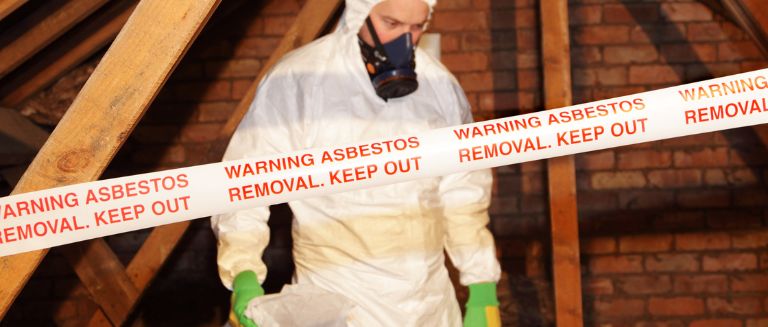
UKATA Asbestos Awareness course
Our UKATA Asbestos Awareness course supports organisations to meet legal duties under the Control of Asbestos Regulations 2012 by raising employees’ awareness of asbestos risks. It ensures staff can recognise potential hazards, reducing the chance of accidental exposure.
Approved by the UK Asbestos Training Association (UKATA), this online course meets recognised standards for asbestos awareness training, giving employers confidence that training is high-quality, up-to-date, and aligned with industry expectations and Health and Safety Executive guidance.
This UKATA course is sold under licence from Tetra Consulting, a UKATA Approved Member (MEMB/217).
Want to find out more information on our UKATA Asbestos Awareness course?
Use the form below to discuss Multi-User Discounts with our team.
Benefits of our UKATA Asbestos Awareness course
- Improves confidence in managing asbestos-related risks across your organisation through real-life case studies, regulatory guidance, and practical emergency procedures.
- Enables your organisation to deliver essential asbestos awareness training to employees at scale, supporting ongoing compliance with the Control of Asbestos Regulations 2012.
- Developed and delivered by qualified health and safety professionals with extensive experience in asbestos awareness and workplace risk management.
- UKATA-approved content ensures your employees receive accurate, up-to-date training in line with recognised industry standards and Health and Safety Executive guidance.
- Interactive, online training to keep participants engaged throughout.
- Multiple choice quizzes so participants can check their understanding as they go.
- Summaries at the end of each section to enhance understanding.
- CPD Certified and SCORM Compliant training.
UKATA accreditation
Our Asbestos Awareness course is UKATA accredited, providing assurance that it meets the high standards set by the UK Asbestos Training Association. UKATA accreditation is widely recognised across industries and confirms that the course is aligned with the requirements of the Control of Asbestos Regulations 2012.
UKATA set strict criteria for membership and course delivery, ensuring that our training is accurate, up to date, and delivered by competent professionals.
The course is also SCORM compliant, which means it can be integrated as part of your existing LMS or used as part of our SHINE learning management system.
Ways to study

Online
You can study whenever and wherever suits you. Online courses are delivered through our SHINE platform, or to your own learning management system via SCORM.
eLearning

With eLearning, participants can access course materials at their convenience, fitting around their commitments.
- Engaging. Our courses engage learners through multimedia elements, simulations, and interactive exercises. This encourages active participation and increases learning retention.
- Tracking. Our learning management system, SHINE, enables administrators to track learners’ progress, the courses they have attended and the dates, which supports health and safety compliance.
- SCORM compatible. We offer courses as SCORM files so they can be integrated into an organisation’s existing learning management system.
- Assessment. There are multiple-choice quizzes throughout the courses so learners can check their understanding as they progress and consolidate their learning.
- Summaries. Each module concludes with a summary, reinforcing key concepts and enhancing understanding.
Our virtual classroom combines the advantages of in-person training with online learning.
- Experienced trainers. Online tutorials are led by health and safety trainers with many years of experience in the field. Learners benefit from their expertise and industry knowledge.
- Interactive. Learners can ask questions in real-time and receive immediate feedback from trainers, enhancing their understanding.
- Bespoke. Courses can be customised to meet an organisation’s specific requirements, so participants can apply what they have learned most effectively.
Virtual Classroom

Face-to-Face

Learning in-person in a collaborative environment equips your team with the knowledge and skills they need to ensure workplace safety and compliance.
- Expert trainers. Benefit from the expertise of qualified trainers with years of health and safety experience across a broad range of industries and types of organisations.
- Flexible. Choose a location convenient for your team, whether at your premises or a designated training facility.
- Tailored. Course content can be customised to align with your organisation’s specific requirements and industry challenges, ensuring knowledge can be applied effectively to your workplace.
- Supportive. Learners engage in discussions, share knowledge, and collaborate to learn from each other’s perspectives and experiences as well as from the trainer.
- Interactive. Sessions are interactive to encourage active engagement which enhances understanding and helps learners to retain knowledge. Learning is through questions, feedback, discussions, and instructor-led presentations.
What our clients say
From national pub chains to global insurance, our clients value our expertise and service.

By the end of the UKATA Asbestos Awareness online course, participants will be able to:
- Understand the nature and properties of asbestos, and its health impacts.
- Recognise the types, uses, and likely locations of asbestos.
- Understand how to mitigate asbestos-related risks.
- Carry out work activities safely, ensuring no risk to themselves or others.
- Understand key aspects of asbestos regulations and how they integrate with wider health and safety legislation.
- Follow correct procedures when encountering potential asbestos-related hazards.
1. What is asbestos?
- The history of asbestos and how it was mined and used in the past.
- How asbestos became widely used in the twentieth century, and when health concerns began to arise before phasing out led to a full UK ban.
2. Where is asbestos from?
- The countries where asbestos was mined in the past and where it is still mined today.
3. The properties of asbestos
- The unique properties that have meant asbestos was considered a valuable material.
- The wide range of products made from asbestos.
4. Types of asbestos
- A look at the properties of the three common types of asbestos and where they are still found today.
5. Asbestos and the human body
- The ways in which asbestos fibres can be released into the air, and how they can enter the human body.
- The health effects of asbestos and which occupations and individuals are at greatest risk.
- The potentially fatal diseases caused by asbestos exposure, with symptoms of each condition, treatment options to improve quality of life, and how to reduce the risk of developing asbestos-related diseases following asbestos exposure.
- Statistics to show how widespread asbestos-related health conditions are.
6. Asbestos exposure limits
- Emphasising that there is no safe level of asbestos exposure, but how the amount and duration of exposure affect the risk of developing asbestos-related diseases.
- The factors that can increase someone’s risk of developing asbestos-related conditions, including:
- genetics
- smoking history
- pre-existing lung conditions
- immune system function
7. Latency periods
- How asbestos-related diseases have different latency periods and how long these are.
- Health and Safety Executive mortality data for mesothelioma, lung cancer, and asbestosis.
8. Case study
- Looking at how a particular individual became exposed to asbestos and how the failure to take safety precautions meant he developed mesothelioma, an aggressive cancer. This case study highlights the silent damage asbestos can cause.
9. Where asbestos containing materials (ACMs) are found today
- The types of buildings, vehicles and products where ACMs may be contained – despite its ban in 1999.
- How asbestos was widely used in construction, industrial and commercial applications in the past.
10. Friability
- What ‘friability’ means and how it is a key factor in determining the danger of ACMs.
- Examples of friable and non-friable ACMs.
- Looking at the logical sequencing of ACMs, ordered from high to low risk based on friability, and where each type of ACM is found.
11. Use of asbestos for insulation
- Why asbestos was used to insulate boilers and heating pipes, and as loose fill.
- Where you might find asbestos in these areas and what to do/not to do.
12. Further examples of ACM locations
- Looking at all the locations in a residential home where ACMs might be found.
- A brief overview of the time period of using various ACMs. For example, Artex was used until the end of 1999.
13. How to identify the presence of asbestos at a worksite
- What an asbestos register is and why it is important.
- Why asbestos surveys are essential, and the two types of survey under the Control of Asbestos Regulations 2012.
- What an asbestos management plan (AMP) is, and what an effective AMP should contain.
14. Emergency procedures
- Examples of emergency procedures provided by UKATA.
15. Assessing whether commercial premises contain asbestos
- The four reasonable steps to take when identifying ACMs in commercial premises.
- Emphasising that the absence of a warning sign does not guarantee an asbestos-free material.
16. What to do in the event of disturbance or exposure
- The critical steps to take if asbestos is disturbed or you are exposed.
17. When to report an asbestos incident
- When an asbestos incident must be reported under the Reporting of Injuries, Diseases and Dangerous Occurrences Regulations 2013 (RIDDOR).
- How the types of incidents that must be reported under RIDDOR are most likely to occur.
18. Regulations relating to asbestos
- Looking at the regulations that protect workers and the public from asbestos exposure and why they are important, including:
- Health and Safety at Work etc. Act 1974
- Construction (Design and Management) Regulations 2015
- Control of Asbestos Regulations 2012
- Asbestos Prohibition Regulations 1985
- Control of Asbestos at Work Regulations 2002
- Control of Asbestos Regulations 2006
19. Responsibilities of duty holders
- Who duty holders are under Regulation 4 of the Control of Asbestos Regulations 2012 and what their responsibilities are.
- Emphasising that the focus is on managing asbestos safely rather than removing it.
- How the Health and Safety Executive’s Approved Code of Practice helps duty holders to understand and carry out their responsibilities.
20. The duties of other ‘responsible persons’
- Who other ‘responsible persons’ are in relation to asbestos and what their responsibilities are under the law.
21. Employers’ duties
- What an employer’s duties are under Regulation 5 of the Control of Asbestos Regulations 2012.
- How Regulation 6 places a legal duty on employers to assess the hazard and risk posed by asbestos before any work begins
- The purpose of the risk assessment and what it must consider.
22. Overview of asbestos at work categories: LW, NNLW and NLW
- Under the Control of Asbestos Regulations 2012 asbestos work is divided into three categories based on the level of risk:
- licensed work (LW),
- notifiable non-licensed work (NNLW), and
- non-licensed work (NLW).
- Looking at examples of the types of work that fall under each category and what action must be taken.
At the end of the UKATA Asbestos Awareness course there are 15 multiple choice questions to answer, and the pass mark is 80%.
Certificate
If you complete the UKATA Asbestos Awareness training on SHINE, you will receive a certificate on successful completion of the course, which is downloadable as a PDF file.
Who should take this course?
UKATA Asbestos Awareness training online is for anyone who may encounter asbestos–containing materials during their work, including electricians, plumbers, joiners, decorators, heating engineers, maintenance staff, facilities managers, site supervisors, surveyors, architects, building inspectors, and anyone planning or overseeing work in buildings that may contain asbestos.
The course is also suitable for duty holders and those responsible for health and safety management who need to understand their legal responsibilities under the Control of Asbestos Regulations 2012.
How is it delivered?
The UKATA Asbestos Awareness course is delivered online or through a computer network to each trainee at their desktop, laptop or mobile device. We can also provide the course to be integrated into a SCORM compliant LMS.
Training can be completed at the employee’s own pace by “bookmarking” and recording progress and returning to the training later.
Course duration
The UKATA Asbestos Awareness online course takes a minimum of 3 hours to complete.
How do I know if my organisation needs to provide asbestos awareness training?
If your employees are likely to come across asbestos-containing materials during their work, whether in construction, maintenance, refurbishment, or surveying, then asbestos awareness training is a legal requirement under Regulation 10 of the Control of Asbestos Regulations 2012.
How often do employees need a UKATA asbestos awareness refresher?
There is no fixed legal renewal period, but the Health and Safety Executive (HSE) recommends that asbestos awareness training be refreshed annually to ensure knowledge remains up to date and relevant to current working conditions.
Is this course sufficient for working with or removing asbestos?
No, this UKATA Asbestos Awareness eLearning course is for awareness only. It does not qualify participants to work with or remove asbestos. Additional training is required for notifiable non-licensed or licensed asbestos work.
What happens if someone fails the course assessment?
Participants who don’t pass the assessment on their first attempt can review the course material and retake the assessment. The course is designed to support learning, with interactive elements and quizzes to reinforce understanding throughout.
What kind of support can I expect if I encounter issues with the course?
We offer full technical support to ensure a smooth experience, whether you’re using our SHINE platform or integrating the course into your LMS. Additionally, our customer support team is available to answer any questions related to course content or compliance.
Is there a discount if I need to train a large team?
Yes, we offer volume discounts for businesses that need to train multiple employees. Please contact us to discuss your requirements, and we can provide pricing based on your team size.
How quickly can this training be rolled out to my team?
Once purchased, the course can be accessed immediately through our SHINE platform or integrated into your existing LMS, allowing employees to begin training right away.
Can I monitor employee progress throughout the training?
Yes, if using the SHINE platform, you can track employees’ progress, view completion rates, and download certificates for compliance records.

SHINE – compliance record keeping made easy
The Praxis42 Digital Platform SHINE is our advanced eLearning management system and helps organisations deliver effective online learning for their employees.
A cost-effective tool for compliance record-keeping, SHINE allows you to view and manage employee training records easily. Individual training certificates can be printed as proof of compliance for audits or visits from enforcing agencies.
lth and Safety UK a Ericsson
Download our UKATA Asbestos Awareness Brochure